We celebrate durian for its flesh, but the tree it grows on has quietly earned its own folklore. Across Southeast Asia, durian leaves have appeared in traditional remedies, household practices and old wives’ wisdom for generations. This is a balanced, curious look at those traditional uses — what people have done with durian leaves, and what to keep sensibly in mind.
A note up front: this isn’t medical advice. Traditional use is not the same as proven treatment, and if you have a health concern you should always check with a qualified professional. What follows is cultural background, not a prescription.
The durian tree, not just the fruit
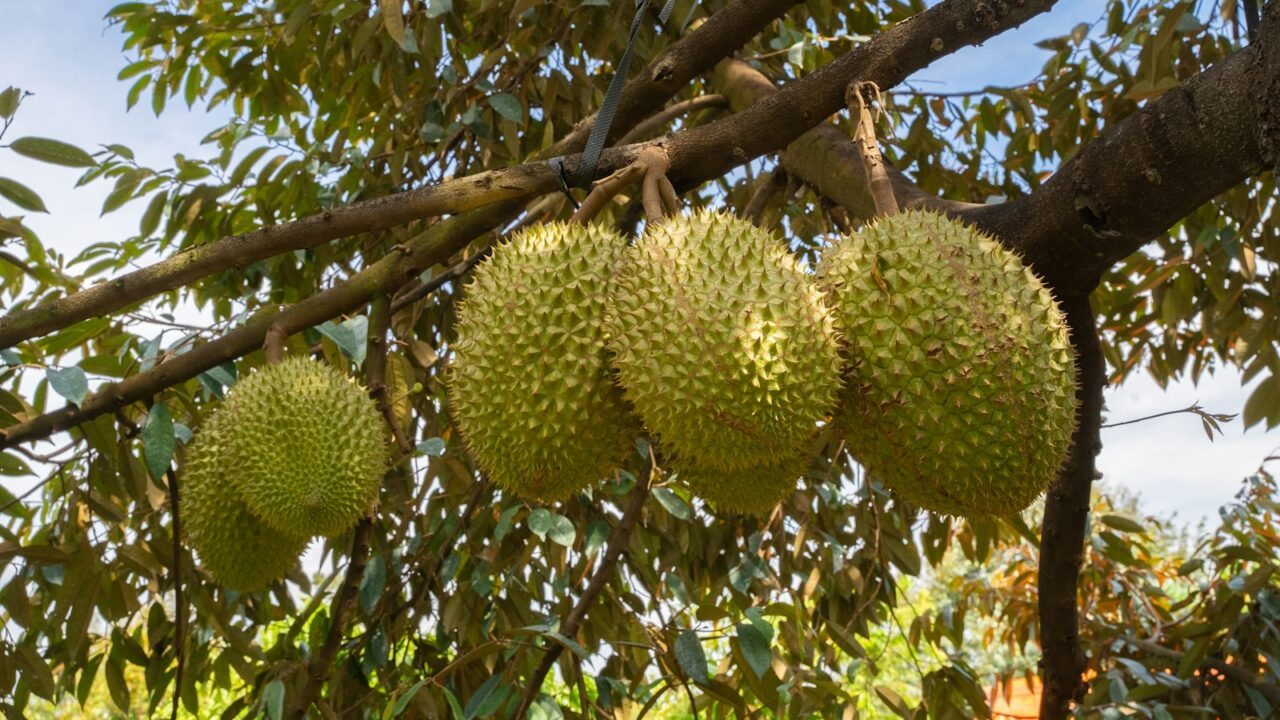
The durian tree (Durio zibethinus) is a tall tropical hardwood with large, glossy, elongated leaves. Their undersides often carry a fine coppery or silvery sheen, which is one way growers recognise the tree from a distance. In durian-growing regions, almost every part of the tree has, at some point, been put to use — the timber for building, the husks for fuel or scrubbing, and the leaves in various folk practices.
That resourcefulness is the real story here: in traditional farming communities, little went to waste, and the leaves were simply part of that make-do culture.
Traditional uses of durian leaves
Accounts vary from village to village and country to country, so treat these as documented folk traditions rather than established fact:
- Herbal baths and washes: In some traditions, durian leaves were boiled and the water used in baths, particularly as a folk remedy associated with fever or general recovery.
- Decoctions and poultices: Leaves have been boiled into decoctions or crushed into poultices in various folk-medicine practices.
- Everyday household use: Large leaves have practical value in rural settings — as wrapping, lining, or kindling.
The important word throughout is traditional. These practices reflect cultural heritage and generations of household experience, not modern clinical evidence.
What we can and can’t say
It is tempting to leap from “people used it for fever” to “it treats fever”, but that leap isn’t supported. Folk use tells us what communities valued and tried; it doesn’t confirm that a remedy works, or that it is safe in any particular dose. Robust, modern evidence on durian leaves specifically is limited, so the honest position is:
- Durian leaves have a real place in Southeast Asian folk tradition.
- That tradition is culturally interesting and worth recording.
- It is not a substitute for medical care, and we make no health claims for durian leaves.
If you are curious about a traditional remedy, the sensible path is to speak to a doctor or a qualified practitioner before trying anything — especially if you are pregnant, on medication, or managing a condition.
Durian leaves and the “heaty” belief
Anyone who has eaten durian in Singapore knows the folk belief that the fruit is “heaty” — thought to raise the body’s internal heat. This idea sits within traditional Chinese and Malay wellness frameworks, and it is part of why durian is often paired with cooling foods or drinks. Some folk practices around the durian tree, including uses of its leaves, are woven into this same worldview of balancing “heat” and “cooling” in the body.
Whether or not you subscribe to it, the “heaty” belief is a lovely example of how deeply durian is embedded in local culture — right down to how people think about the tree’s leaves. For the record, this is cultural belief rather than clinical fact, and we mention it for context, not as advice.
A resourceful food culture
Perhaps the nicest way to read the folklore around durian leaves is as a window into a whole way of living. In durian-growing villages, the tree wasn’t just a source of fruit for a few weeks a year — it was a resource used from top to bottom. The flowers marked the season, the fruit fed families and fetched income, the seeds became a cooked snack, the husks were burned or repurposed, and even the leaves found their way into baths, wraps and remedies. Nothing was wasted.
That resourcefulness, more than any single remedy, is what the story of durian leaves really preserves. It’s a reminder that our modern habit of eating only the flesh and binning the rest is a fairly recent luxury.
Respecting tradition without overclaiming
The most honest way to appreciate durian leaves is the way you might appreciate any piece of intangible heritage: with genuine interest and a clear head. Enjoy the stories, respect the communities who kept them alive, and separate the cultural richness from any health promise. Durian’s greatest gift, after all, remains the fruit itself.
Enjoy the fruit the tree is famous for
While the leaves belong to folklore, the flesh belongs on your table. If reading about the durian tree has you craving the real thing, our Singapore durian delivery service brings freshly dehusked fruit to your door across the island. Explore the full durian catalog, treat yourself to a box of Mao Shan Wang, or, if you want to see durian trees up close, consider one of our plantation tours to a working farm.
Frequently asked questions
Are durian leaves safe to consume?
Durian leaves appear in various folk traditions, but modern safety evidence is limited and we make no health claims. This isn’t medical advice — check with a qualified professional before trying any traditional remedy.
Do durian leaves have proven health benefits?
No proven, clinically established benefits are documented here. Their uses are traditional and cultural. Folk use records what communities tried, not what science has confirmed.
Why are durian leaves used in traditional baths?
In some Southeast Asian folk traditions, boiled durian-leaf water was used in baths, often linked to fever or recovery. This is heritage practice, not a substitute for medical treatment.
What does the durian leaf look like?
Durian leaves are large, glossy and elongated, often with a fine coppery or silvery sheen on the underside — one way growers recognise a durian tree from a distance.
Folklore is fascinating, but the fruit is the real treasure. Message us on WhatsApp for today’s seasonal price and we’ll deliver a fresh, dehusked box islandwide — start at our durian delivery page.