If you have ever seen “durian belanda” on a fruit stall or a drink menu and assumed it was some exotic cousin of the King of Fruits, here’s the plot twist: durian belanda is not a durian at all. It is the Malay name for soursop. This guide explains what durian belanda really is, where the confusing name comes from, and how soursop and true durian genuinely differ.
It’s a classic case of a name creating expectations the fruit never meant to promise. Once you know the story, you’ll never mix the two up again.
The short answer: durian belanda is soursop
Durian belanda is the Malay name for soursop (Annona muricata). “Belanda” is the Malay word for Dutch or Holland, so the name translates roughly to “Dutch durian” — a foreign, durian-like fruit. Despite the name, soursop is not a true durian and is not closely related to it botanically.
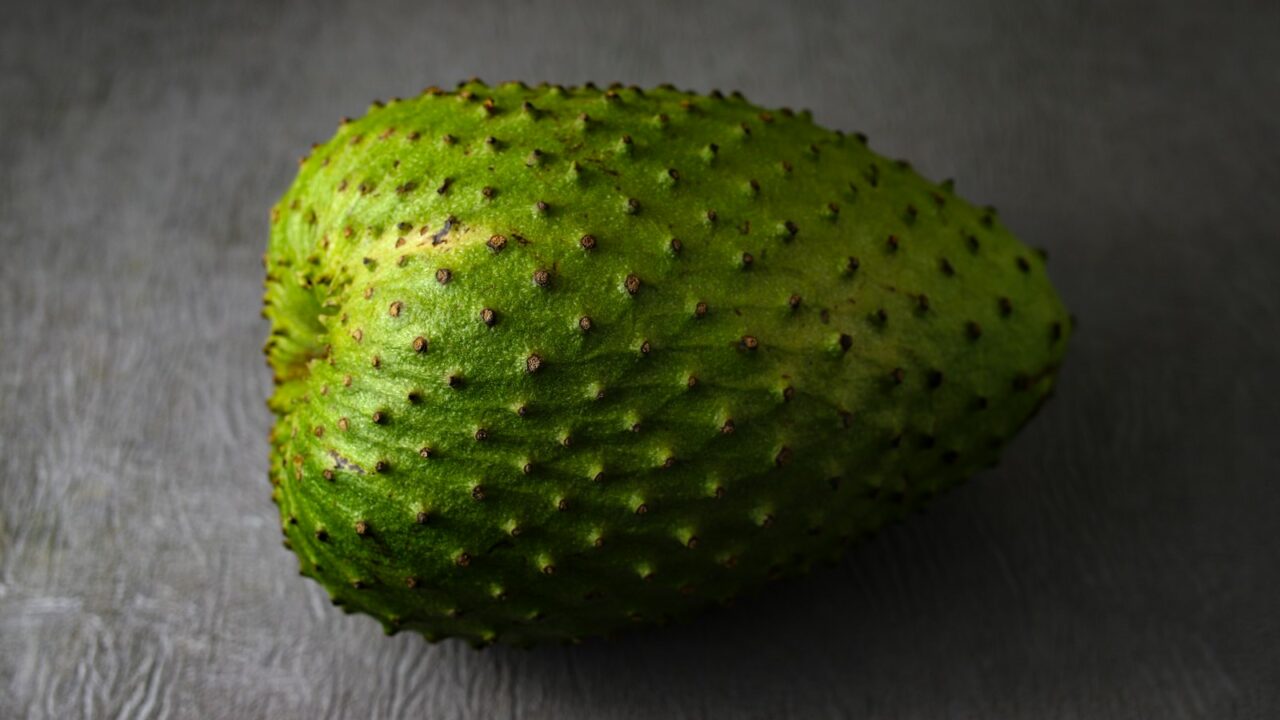
So when you see durian belanda advertised, picture a green, spiky, tangy-sweet fruit that is soft and juicy inside — nothing like the rich, custardy flesh of a real durian.
Why is soursop called “durian belanda”?
The name comes down to appearances and history:
- The spiky skin: Soursop has a green skin covered in soft, fleshy spines that superficially resemble a durian’s thorns. To a passing eye, the outline is durian-like.
- The “belanda” tag: “Belanda” (Dutch/Holland) has historically been used in Malay to label things seen as foreign or introduced from abroad. Soursop is native to the tropical Americas and was spread around the world during the colonial era, so a “foreign durian” name fits its arrival story.
Put together, “durian belanda” essentially means “the foreign, durian-looking fruit” — a practical local nickname based on how it looks, not on what family it belongs to.
Soursop vs true durian: how they really differ
Beyond the spiky silhouette, the two fruits could hardly be more different.
| Feature | Durian Belanda (Soursop) | True Durian |
|---|---|---|
| Botanical family | Annonaceae (custard-apple family) | Malvaceae (genus Durio) |
| Origin | Tropical Americas | Southeast Asia |
| Skin | Green with soft, bendy spines | Hard, sharp woody thorns |
| Flesh | White, fibrous, juicy | Creamy, custardy, dense |
| Flavour | Tangy-sweet, citrusy, sour edge | Rich, sweet, sometimes bittersweet |
| Smell | Mild, fresh, fruity | Powerful, pungent, unmistakable |
The takeaway is clear: soursop and durian belong to entirely different botanical families and originate on opposite sides of the planet. The shared “durian” in the name is a nickname, not a family tie.
What soursop actually tastes like
Soursop is prized for its refreshing, tangy flavour — often compared to a blend of pineapple, strawberry and citrus with a creamy body. The flesh is soft, white and fibrous, dotted with inedible black seeds. It is popular blended into juices, smoothies and ice creams across Southeast Asia, exactly the kind of cooling drink you might reach for in Singapore’s heat. In other words, it is a lovely fruit in its own right — just don’t expect it to taste anything like a real durian.
Durian belanda in Singapore
In Singapore, you’re most likely to meet durian belanda not as a whole fruit but as a drink. Soursop juice and soursop smoothies are common at fruit stalls, kopitiams and juice bars, prized for being cooling and refreshing in the heat — the opposite of durian’s rich, “heaty” reputation. You may also see it labelled simply as “soursop” in English, “durian belanda” in Malay, or by other regional names, all pointing to the same fruit.
This is exactly where the confusion tends to bite: a menu might list “durian belanda juice” and a durian newcomer could reasonably expect a thick, pungent durian shake. What arrives instead is a light, tangy, citrusy drink. Knowing the name in advance saves the surprise — and lets you order whichever one you actually wanted.
Other fruits with borrowed “durian” names
Durian belanda isn’t the only fruit whose name borrows durian’s fame. Across the region, spiky or exotic fruits sometimes pick up “durian”-style nicknames based on looks rather than lineage. The lesson is a simple one for any shopper: a name that includes “durian” doesn’t guarantee you’re getting a true Durio at all. When in doubt, look past the label and check the fruit’s actual family, origin and flesh.
Don’t be fooled by the name
Names travel and mutate, and “durian belanda” is a perfect example of how a fruit can borrow another’s identity through nothing more than a spiky resemblance. If you genuinely want the King of Fruits — that thick, aromatic, custardy flesh — soursop won’t scratch the itch, no matter how durian-like it looks on the shelf.
Craving the real King of Fruits?
Now that you know durian belanda is soursop, you can shop with clear eyes. For actual durian — thick, fragrant and creamy — explore our durian varieties guide to find your match, then browse the full durian catalog. A box of Mao Shan Wang is the definitive answer to “what does real durian taste like”. If you want to see how many genuine varieties exist, this brief guide to durian varieties in Singapore is a great primer.
Frequently asked questions
Is durian belanda the same as durian?
No. Durian belanda is the Malay name for soursop (Annona muricata), a completely different fruit from a different botanical family. Despite the name and spiky skin, it is not a true durian.
What does “belanda” mean?
“Belanda” is Malay for Dutch or Holland, and has historically been used to label foreign or introduced things. So “durian belanda” roughly means “the foreign, durian-looking fruit” — a nod to soursop’s spiky skin and overseas origin.
Where does soursop come from?
Soursop is native to the tropical Americas and was spread widely during the colonial era. True durian, by contrast, is native to Southeast Asia.
Does soursop taste like durian?
Not at all. Soursop is tangy, citrusy and refreshing with soft, fibrous white flesh, while true durian is rich, creamy and pungent. They are entirely different eating experiences.
Want the genuine article rather than a look-alike? Message us on WhatsApp for today’s seasonal price and we’ll deliver fresh, dehusked durian islandwide — start at our durian delivery page.