If durian dodol is durian caramel, then durian lempok is durian fudge — a soft, sticky, intensely fruity sweet made from little more than durian and sugar, cooked down until it turns thick and spoonable. Popular across Sumatra, Kalimantan, Riau and the wider Malay world, lempok is prized because it tastes almost purely of the fruit itself, with none of the coconut or rice flour that dilutes other durian sweets.
In this guide we explain exactly what durian lempok is, how it differs from dodol, what it tastes like, and how to make a small batch at home. It is one of the most honest ways to preserve durian, and a wonderful use for a glut of ripe fruit in season.
What is durian lempok?
Lempok (also called lempuk) is a traditional durian preserve from the Indonesian and Malaysian regions where durian grows in abundance — Riau and the town of Bengkalis are especially famous for it. At its core it is simply ripe durian flesh cooked slowly with sugar until the moisture reduces and the mixture becomes a dense, chewy, fudge-like paste.
Because there is no coconut milk and usually no flour, lempok is essentially concentrated durian. It is typically shaped into logs, wrapped, and sliced to eat as a snack. The long cooking and high sugar content give it a good shelf life, which historically made it a practical way to enjoy durian long after the season had ended.
Lempok vs dodol: what’s the difference?
| Feature | Durian Lempok | Durian Dodol |
|---|---|---|
| Main ingredients | Durian + sugar | Durian + coconut milk + palm sugar + glutinous rice flour |
| Texture | Soft, sticky, fudge-like | Firmer, chewier, toffee-like |
| Flavour | Pure, concentrated durian | Coconut-caramel with durian |
| Colour | Golden to amber | Dark brown |
| Best for | Durian purists | Fans of caramel and coconut |
The short version: choose lempok if you want to taste the durian and almost nothing else; choose dodol if you love the caramel-coconut character of a long-cooked Malay sweet. Both are chewy and sweet, but lempok is softer and fruitier.
What does durian lempok taste like?
Lempok is durian, amplified. Because the flesh is reduced, the flavour becomes deeper and more concentrated, with a jammy sweetness and the full aroma of the fruit. Good lempok is soft enough to yield to a gentle bite but sticky enough to cling. There is no coconut to round it off, so the durian character comes through loud and clear — which is exactly why fans love it.
How to make durian lempok at home
Lempok has one of the shortest ingredient lists of any durian sweet, but like dodol it rewards patience and constant stirring.
Ingredients
- 500g ripe durian flesh, seeds removed and mashed
- 100–150g sugar (adjust to how sweet your durian already is)
- A pinch of salt (optional, to balance the sweetness)
Method
- Mash the durian. Remove all seeds and mash the flesh until smooth. Softer, riper durian works best.
- Cook it down. Put the durian and sugar in a heavy, non-stick pan over low heat. Add the pinch of salt.
- Stir constantly. Keep stirring so it never catches on the base. The mixture will loosen at first as the sugar dissolves, then gradually thicken and darken as the moisture cooks off.
- Watch for the pull-away. After 45 minutes to over an hour, the paste will become thick, glossy and start to pull away from the sides of the pan. That is your cue to stop.
- Cool and shape. Spread it into a lined, lightly greased tray or shape it into a log while still warm. Let it cool and firm up completely before slicing and wrapping.
Tip: the more moisture you cook off, the firmer and longer-lasting your lempok will be — but do not let the sugar scorch, or it will turn bitter. Keep the heat low and stay at the stove.
How to serve and store lempok
- Slice into small pieces and enjoy with coffee or tea.
- Wrap individual pieces to give as a gift or to pack for travel.
- Stored in an airtight container, well-cooked lempok keeps for a week or more at room temperature, and longer refrigerated.
Choosing durian for lempok
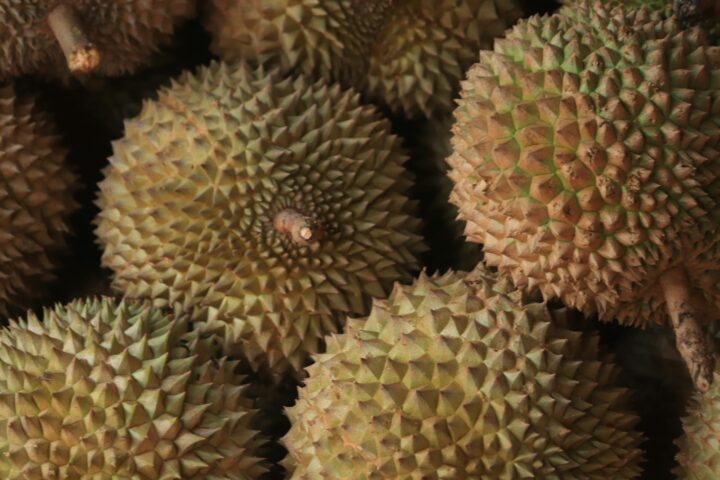
Because lempok is all about pure durian flavour, the variety really shows through. A bittersweet, complex Mao Shan Wang makes a rich, grown-up lempok, while a sweeter, milder durian like Red Prawn gives a gentler, more crowd-pleasing result. This is also a smart use for very ripe fruit — soft flesh mashes and reduces more easily.
If you want to try lempok, start by getting good durian. We deliver freshly dehusked fruit islandwide — browse the durian catalog to pick your variety, or read our complete guide to eating durian in Singapore for more. Prices are seasonal — message us on WhatsApp for today’s price.
Frequently asked questions
Is durian lempok the same as durian dodol?
No. Lempok is made mostly from durian and sugar, giving a soft, fruity fudge, while dodol adds coconut milk and glutinous rice flour for a firmer, toffee-like sweet with a coconut-caramel flavour. Lempok tastes more purely of durian.
Do I need to add flour to make lempok?
No. Traditional lempok uses only durian and sugar. The thickening comes entirely from cooking off the fruit’s moisture. Adding flour would push it towards dodol in texture and dilute the durian flavour.
How long does homemade durian lempok last?
Well-cooked lempok with most of the moisture reduced keeps for about a week at room temperature in an airtight container, and several weeks refrigerated. The higher the sugar and the drier the paste, the longer it lasts.
Which durian is best for lempok?
Any ripe durian works, and it is a great use for very soft fruit. For a rich, complex result choose a bittersweet variety like Mao Shan Wang; for a sweeter, milder lempok, a variety like Red Prawn is ideal.
Craving proper durian to eat fresh or to cook into lempok? Order freshly dehusked durian from our durian delivery service in Singapore and we will bring it to your door — just message us on WhatsApp for today’s seasonal price and to place your order.