If Mao Shan Wang is the loud, bittersweet showstopper, the D24 durian is the smooth, dependable classic that made a whole generation of Singaporeans fall in love with the King of Fruits. Creamy, custardy and just bitter enough, D24 is the variety many old-school durian sellers still call their personal favourite.
In this guide we walk through where D24 came from, what it actually tastes like, how to tell a good one from a flat one, and how to enjoy it at its best. Whether you are a curious first-timer or a seasoned fan looking to revisit a classic, this is everything you need to know.
What is the D24 durian?
D24 is one of the most established registered durian clones in the region — the “D” simply stands for durian, and the number is its clone registration. It has been grown and eaten for decades, long before Mao Shan Wang became the darling of the durian world. For years, D24 was the premium durian in Singapore, and it remains a benchmark that others are measured against.
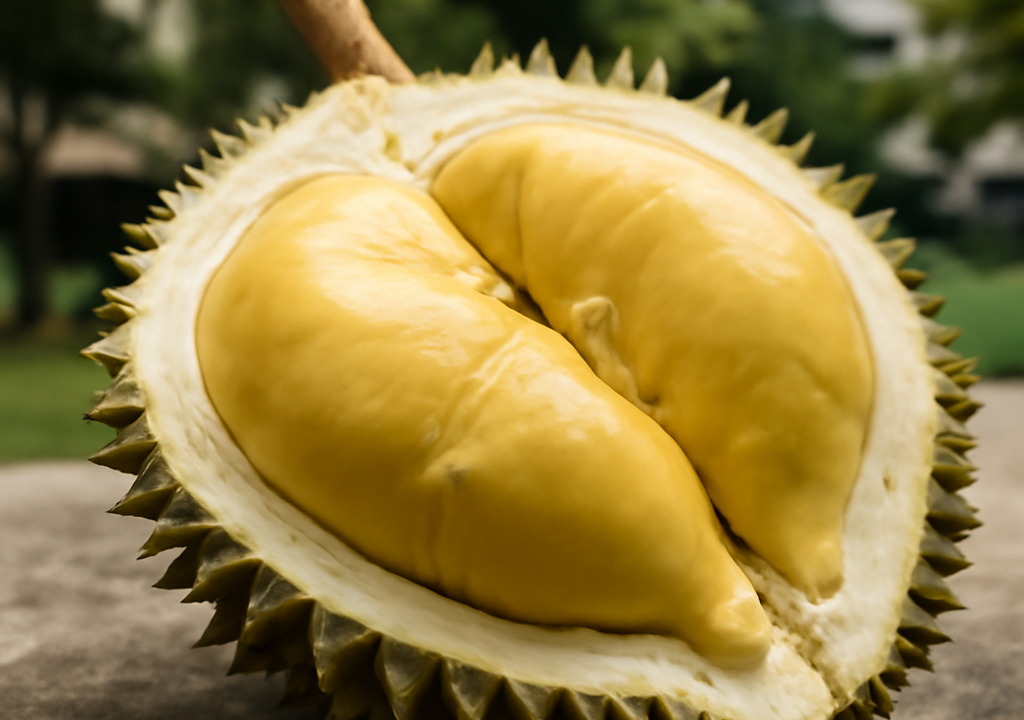
Part of D24’s staying power is consistency. The flesh is pale yellow, thick and dense, with a flavour that leans creamy and mellow rather than aggressively bitter. It is the durian that reminds many people of their childhood — the one their grandparents queued up for at the roadside stall.
What does D24 taste like?
The signature of a good D24 is balance. Expect a rich, custardy sweetness with a gentle bitter finish and, in a well-ripened fruit, a faint alcoholic, wine-like note. The texture is soft and buttery, sometimes almost fudgy, and it coats the palate rather than punching it.
- Sweetness: moderate to high, clean and buttery.
- Bitterness: present but restrained — a supporting note, not the headline.
- Texture: creamy, dense, custard-like.
- Aftertaste: lingering, faintly boozy in a properly ripe fruit.
This gentler profile is exactly why D24 is such a good bridge durian. If Mao Shan Wang’s intensity is too much for you, or you are introducing durian to a nervous first-timer, D24 is friendlier without being boring.
D24 vs XO D24 — what’s the difference?
You will often see XO D24 on menus and price lists. XO is not a separate variety — it is D24 fruit that has been left to ferment a little longer on the tree or after harvest, which deepens that wine-like, “boozy” character. The result is a bolder, more complex, slightly more bitter version of the same fruit. If you love the classic D24 but want more punch, our XO D24 is the natural next step.
How to pick a good D24
You do not have to be an expert to choose well. A few pointers:
- Smell: a ripe D24 gives off a warm, sweet, slightly fermented aroma — not sharp or sour.
- Weight and shape: look for fruit that feels heavy for its size, with full, plump segments.
- Flesh colour: pale to medium yellow, glossy and smooth — dull or watery flesh signals an overripe or under-tended fruit.
- Freshness: durian degrades fast once opened. This is where buying dehusked-to-order really matters.
Because durian is a seasonal, natural product, quality varies from tree to tree and week to week. When we open D24 for delivery, we taste-check and pick for you, so you are not gambling on a random box.
How to enjoy D24 at its best
D24 shines eaten fresh and slightly cool — chill it in the fridge for 20 to 30 minutes to firm up the custard and lift the aroma. It is also the workhorse variety for durian desserts: because it is affordable and creamy, D24 is a go-to for pengat, durian cake, mousse and homemade ice cream.
Pair it with unsweetened Chinese tea to cut the richness, and always keep water nearby. For the full ritual — the do’s, the don’ts and the myths — our friends’ explainer on how to eat durian in Singapore is worth a read.
Where D24 sits in the durian world
Think of the durian lineup as a spectrum. D24 sits comfortably in the middle: more refined than budget varieties, more approachable than the intense premiums. To see how it stacks up against everything else, browse our guide to Singapore durian varieties, or if you already know you want the classic, order it fresh from our durian catalog.
When is D24 in season, and how should you store it?
Like most Singapore-available durians, D24 follows the Malaysian harvest cycles, with the main season typically peaking around the middle of the year and a smaller window later on. During peak season you get the best flavour and the friendliest prices, so it is worth planning your D24 cravings around it. Off-peak, supply is thinner and quality more variable — another reason to buy from a seller who taste-checks.
Once you have your D24, eat it as fresh as possible. If you must keep it, store the flesh in an airtight container in the fridge and finish it within a day for the best texture; the aroma will spread through your fridge, so seal it well. You can also freeze durian flesh for later use in desserts — it keeps its flavour surprisingly well and blends straight into ice cream or pengat. What you should not do is leave opened durian sitting at room temperature, where it turns quickly.
Frequently asked questions
Is D24 cheaper than Mao Shan Wang?
Generally yes — D24 usually sits below Mao Shan Wang in price, which is part of why it is such good value. Durian prices are seasonal, though, so message us on WhatsApp for today’s price.
Is D24 good for first-timers?
Very. Its creamy, balanced, only mildly bitter profile makes it one of the friendliest premium durians to start with.
What is the difference between D24 and XO D24?
Same variety — XO D24 is fermented a little longer, giving a stronger, boozier, more bittersweet flavour. Classic D24 is milder and sweeter.
Can I use D24 for baking and desserts?
Yes, D24 is a favourite for durian cakes, pengat, mousse and ice cream thanks to its creamy texture and reasonable price.
Ready to taste a classic done right? Browse the full range in our durian catalog or WhatsApp us for same-day durian delivery in Singapore — we will dehusk your D24 to order and pick a good one for you.